



The Japanese yen edged higher in Asian trading on Thursday, trimming a three-day decline as optimism over efforts to reopen the Strait of Hormuz restrained demand for the US dollar. USD/JPY traded around 159.20, although firmer US inflation and expectations of further Federal Reserve tightening limited the yen’s recovery.
Market Snapshot
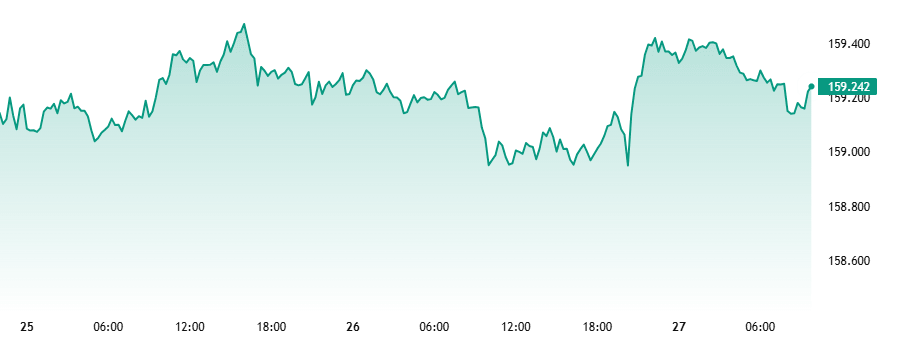
USD/JPY traded near 159.23 in early Asian dealings after the yen weakened over the previous three sessions. The Japanese currency remains well below levels reached after joint US-Japan intervention earlier in the northern summer, but has recovered from a multi-decade low near 164.
The US Dollar Index rose about 0.2% to 99.13, its highest level since 19 August. The greenback drew support from stronger-than-expected US inflation data, while currency traders avoided large positions ahead of central-bank speeches at the Jackson Hole symposium.
The yen found some support from expectations that the Bank of Japan could raise interest rates as soon as September, narrowing a rate gap that has been a major driver of yen weakness.
Hormuz Optimism Limits Dollar Demand
Markets were assessing signs of progress towards resolving the dispute over the Strait of Hormuz, a critical route for global energy shipments.
Iran’s Revolutionary Guards said Iran and Oman had reached an understanding over control of the waterway and revenue generated from shipping. A senior Iranian source later said negotiations were still continuing and that a final agreement had not been completed.
Qatari Prime Minister Sheikh Mohammed bin Abdulrahman al-Thani was also due in Tehran on Thursday to pursue mediation between Iran and the United States. Qatar helped broker an earlier ceasefire and has acted as a communication channel between Washington and Tehran.
Oil prices declined for a fourth consecutive session as hopes of progress increased. Lower energy prices could reduce inflation pressure and lessen demand for the dollar as a geopolitical safe haven.
US Inflation Keeps Fed Bets Alive
The yen’s gains were limited by fresh evidence that US inflation remained persistent.
The Personal Consumption Expenditures Price Index rose 0.2% in July from the previous month, above expectations for a 0.1% increase. Prices were 3.7% higher than a year earlier, unchanged from June and slightly above economists’ forecast of 3.6%.
The figures kept expectations of another Federal Reserve rate increase alive. Higher US borrowing costs tend to support the dollar against the yen by increasing the return available on dollar-denominated assets.
Westpac economist Ryan Wells said Federal Reserve Chair Kevin Warsh’s Jackson Hole speech would be the “ultimate test” for current rate expectations as traders seek clarity on whether persistent inflation will prompt further tightening.
BOJ Rate Decision Moves Into Focus
The Bank of Japan is facing pressure of its own to tighten policy after the weak yen raised import costs and contributed to domestic inflation.
Money markets were pricing an approximately 87% probability that the BOJ would raise rates at its 17 to 18 September meeting. The central bank lifted its policy rate to 1% in June, its highest level in more than three decades.
A Reuters poll conducted in August found that 57% of economists expected the BOJ to raise its policy rate to 1.25% in September. That represented a sharp shift from July, when only 5% expected an increase during the third quarter.
BOJ Deputy Governor Ryozo Himino was due to speak on Thursday. Mitsubishi UFJ Bank analyst Akihiko Yokoo said language similar to that used before the BOJ’s January 2025 increase could be interpreted as a strong signal that another move was approaching.
Fiscal Concerns Restrain Yen
Expectations for tighter monetary policy have not produced a sustained yen rally.
Japan’s expansionary fiscal plans have raised concerns about government borrowing and the sustainability of public finances. Higher Japanese government bond yields have also unsettled investors without delivering the degree of currency support normally associated with rising domestic rates.
The yen has also surrendered much of the advance generated by coordinated intervention involving Japan and the United States in July. Economists surveyed by Reuters generally viewed the intervention as having delayed, rather than reversed, the currency’s underlying weakness.
That leaves the yen highly sensitive to changes in the US-Japan interest-rate differential and signals about how quickly the BOJ is prepared to tighten.
Outlook
Traders will focus on Himino’s comments for clearer indications of whether the BOJ is preparing a September increase. Tokyo inflation figures will provide another test of domestic price pressures.
Attention will then turn to Warsh’s Jackson Hole speech and the outlook for US interest rates. Progress in negotiations over the Strait of Hormuz will remain another important factor, as further declines in oil prices could ease inflation concerns and reduce some of the dollar’s recent support.