



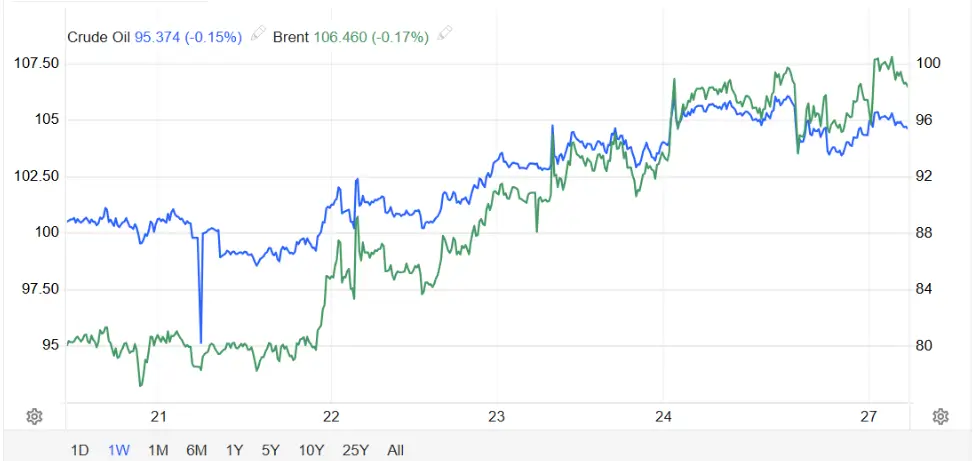
Oil prices swung wildly on Monday as stalled US-Iran peace talks and ongoing disruptions in the Strait of Hormuz fueled supply concerns, overshadowing reports of potential negotiations. Brent crude (LCOc1) settled at $105.33 a barrel, up 0.3 percent, while US West Texas Intermediate crude (CLc1) ended at $94.40, down 1.5 percent after earlier surging over 2 percent.
Market Snapshot
Brent crude futures gained 26 cents to $105.33 per barrel on Monday. WTI crude fell $1.45 to $94.40 after peaking 2 percent higher in early trade. Weekly, Brent climbed about 16 percent and WTI nearly 13 percent, driven by regional tensions, highlighting the different market factors behind WTI and Brent crude.
Geopolitical Trigger
Prices spiked early on fears of escalation after Iran released footage of commandos boarding a cargo ship in the Strait of Hormuz over the weekend. Progress stalled on reopening the waterway, which carried a fifth of global oil flows before the conflict. Only five ships transited in the past 24 hours, including one Iranian oil products tanker, per shipping data.
Trading Reaction
Traders liquidated positions ahead of an unpredictable week, reversing early gains after reports of Iranian Foreign Minister Abbas Araqchi heading to Islamabad for talks mediated by Pakistan. US President Donald Trump noted Iran plans an offer to meet US demands, telling Reuters: “They’re making an offer and we’ll have to see.” Volatility reflected the tug-of-war between supply risks and hopes of negotiation.
Supply Impact
The Strait of Hormuz remains effectively blocked, highlighting US challenges in securing passage amid Iran’s ship captures. Persian Gulf oil and gas exports have plunged since the late February hostilities, adding a geopolitical premium to prices. Trump’s indefinite extension of the ceasefire aims to facilitate talks but has not eased disruptions.