


The US Dollar Index clung to levels just shy of 100 on Thursday, buoyed by safe-haven flows as escalating tensions with Iran rattled global markets. Oil prices surged while equities slipped, underscoring persistent geopolitical risks in the Middle East.
Market Snapshot
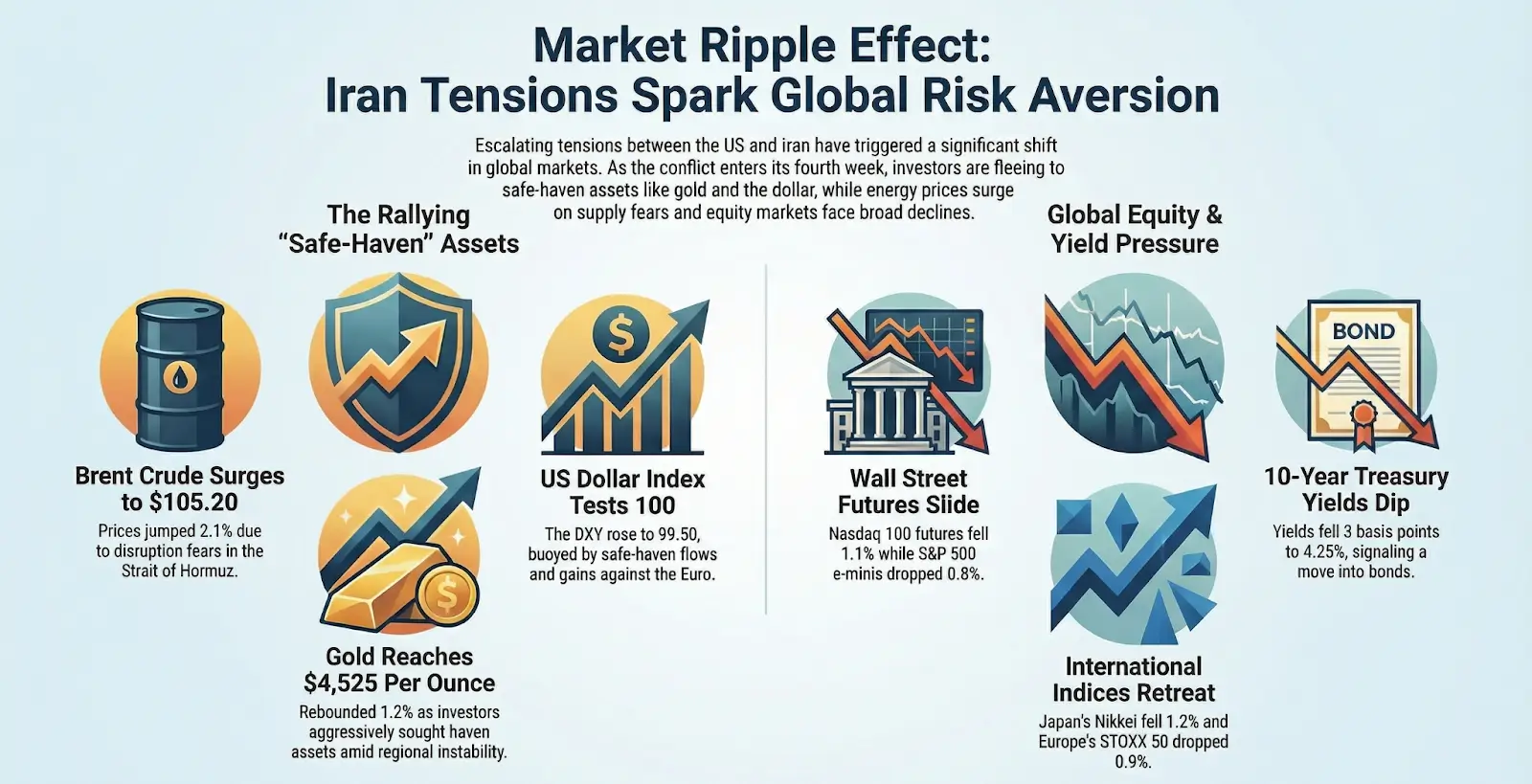
The Dollar Index (DXY) traded near 99.50, up 0.2 percent from Wednesday’s close after testing resistance at 100 earlier in the week. Brent crude (LCOc1) jumped 2.1 percent to $105.20 per barrel, while WTI crude climbed 2.3 percent to $101.50, driven by fears of supply disruptions in the Strait of Hormuz. Gold (XAU) rose 1.2 percent to $4,525 per ounce, rebounding from recent dips as investors sought haven assets.
Geopolitical Trigger
Iran denied US claims of de-escalation talks and vowed new strikes on American targets, prolonging a conflict now in its fourth week. President Donald Trump reiterated demands for Iran’s military capitulation, while Israeli operations targeted Tehran hardliners, including potential successors to Supreme Leader Ali Khamenei. Gulf states edged closer to involvement, heightening fears of broader regional instability.
Equity Pressure
Wall Street futures pointed lower, with S&P 500 (SPX) e-minis down 0.8 percent and Nasdaq 100 futures off 1.1 percent. European benchmarks like the Euro STOXX 50 fell 0.9 percent, reflecting risk-off sentiment amid fragile ceasefire hopes. Asian markets closed mixed, with Japan’s Nikkei down 1.2 percent after oil-linked energy stocks provided some offset.
Safe-Haven Shifts
The dollar gained 0.4 percent against the euro (EUR) to $1.0820 and 0.3 percent on the yen (JPY) to 150.20. US 10-year Treasury yields dipped 3 basis points to 4.25 percent, signaling bond buying, while the Swiss franc (CHF) edged up 0.2 percent as a secondary refuge. Bitcoin held flat near $92,000, caught between risk aversion and inflation hedges.
Policy Responses
The Federal Reserve faces mounting pressure from elevated energy costs, with analysts warning of sticky inflation above 3 percent. European Central Bank officials signaled readiness for rate pauses if growth weakens further. OPEC+ producers discussed output hikes but prioritized stability amid Hormuz threats.