


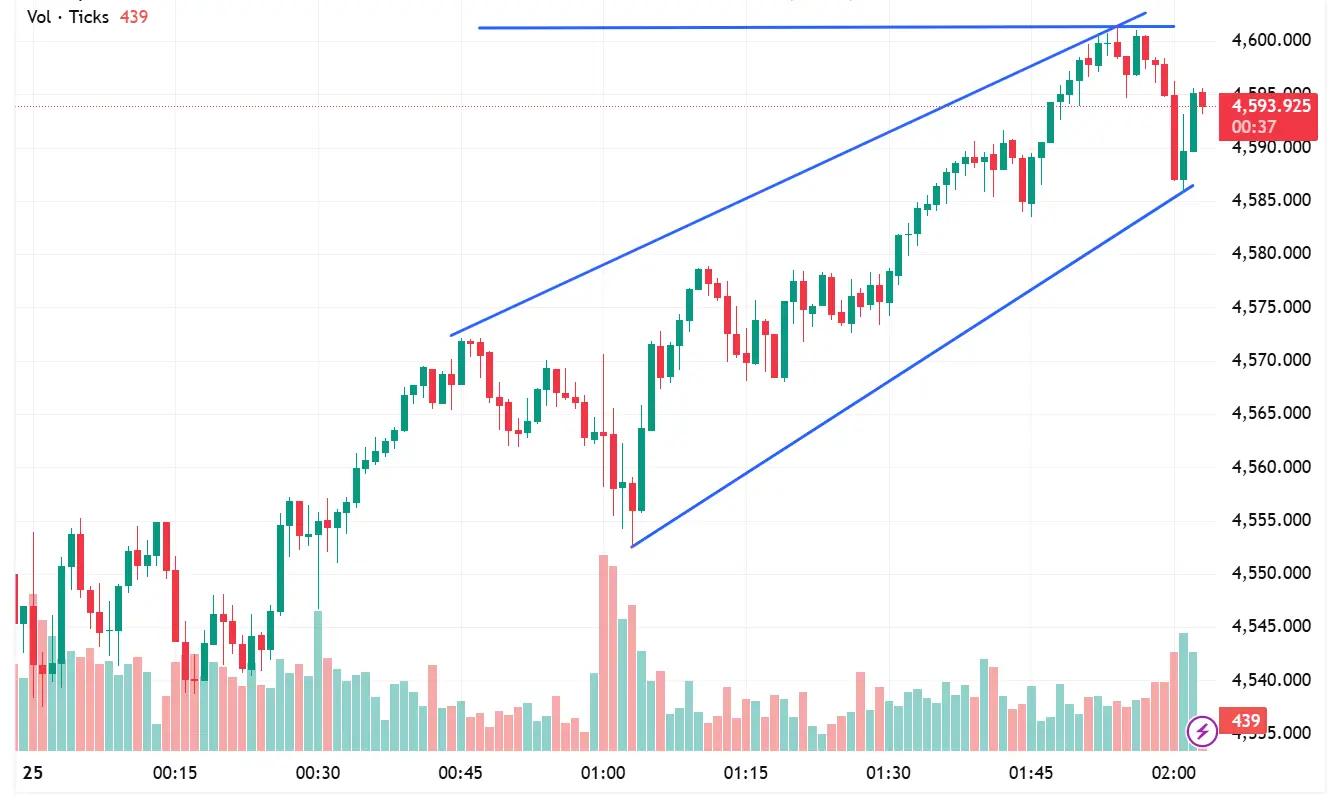
Spot gold climbed back above $4,450 per ounce in early Asian trade on Wednesday, fueled by persistent Middle East conflicts that bolstered demand for the safe-haven asset. The rebound follows a volatile session amid reports of ongoing military actions involving Iran and regional powers.
Market Snapshot
Gold (XAUUSD) traded at $4,465.91, up 1.31% on the day after dipping to around $4,130 earlier in the week. Brent crude (LCOc1) hovered near $102.74 a barrel, up 2.8%, reflecting supply disruption fears from the Strait of Hormuz area. The US dollar index (DXY) held steady around 98.35, limiting further gold upside while equities like the S&P 500 (SPX) edged lower in sympathy.
Event Details
Tensions escalated after US President Donald Trump issued an ultimatum to Iran over the Strait of Hormuz, prompting threats of retaliation against regional desalination plants. Spot gold surged from recent lows near $4,250, reclaiming the $4,450 level as investors sought refuge amid the lack of de-escalation signals. Traders noted gold’s role as a hedge persisted despite a 23% drop from January’s $5,595 peak.
Immediate Reactions
Safe-haven flows lifted gold by over 1.7% intraday, with US gold futures also gaining ground. Oil’s rally added pressure on inflation expectations, pushing the 10-year US Treasury yield up 5 basis points to 4.392%. Equity markets showed caution, with Dow futures down 0.07% and Nasdaq off 0.21% in recent sessions tied to similar risks.
Broader Asset Impacts
The dollar’s firmness capped gold’s gains, as DXY rose 0.42% earlier in the week on war-related safe-haven demand. Defense stocks like Lockheed Martin climbed 6% in prior trading, while broader indices such as the S&P 500 fell 1.1% amid energy supply worries. Yields on 30-year Treasuries rose 4 basis points to 4.956%, signaling bets on tighter Fed policy if oil spikes persist.
Macro Implications
Persistent Middle East risks threaten to stoke inflation via higher energy costs, complicating the Federal Reserve’s rate path amid mixed signals on cuts. Gold’s rebound underscores its enduring appeal for central bank buying and diversification, even after a 13% monthly decline. Growth outlook dims if disruptions hit global trade routes, with analysts eyeing policy responses to contain price pressures.
“Geopolitical headlines keep gold supported, but dollar strength and profit-taking cap the rally,” said Ian Lyngen, head of US rates strategy at BMO. “Traders buy the dip on any whiff of escalation,” added a Singapore-based trader.
Key Monitors
Participants watch Iranian responses in the Strait of Hormuz, upcoming US CPI data for inflation cues, and Fed comments on war-driven energy risks. Escalation signals or diplomatic breakthroughs could swing gold toward $4,600 or back to $4,300. Oil inventory reports and troop deployment updates top the list.