



Oil prices surged more than 4% in early Asian trading on Wednesday after Iran launched ballistic missiles towards US forces in the Middle East, threatening a recent pause in hostilities. Falling US crude inventories and expectations that OPEC+ may halt further output increases from October added support.
Market Snapshot
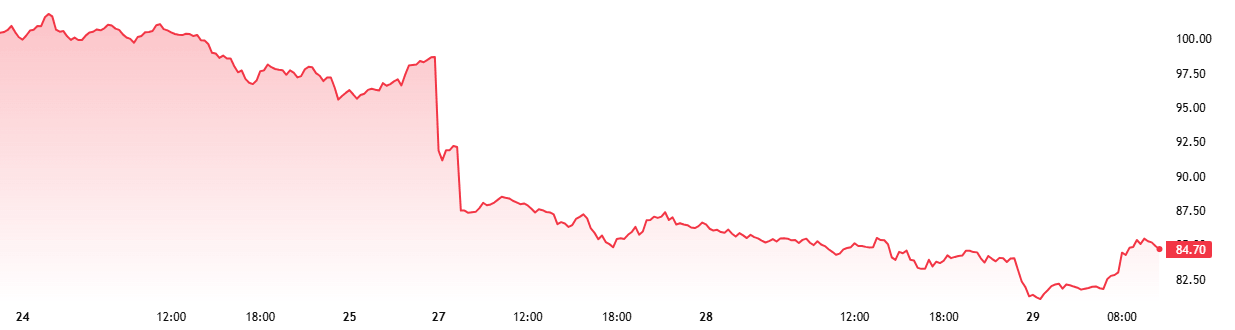
Brent crude futures (LCOc1) rose 4.2% to $87.62 a barrel by 0047 GMT. US West Texas Intermediate crude (CLc1) climbed 4.1% to $82.49 a barrel.
The benchmarks recovered after falling about 15% over the previous three sessions. On Tuesday, Brent settled at $84.09 and WTI at $79.26, their lowest levels in around two weeks, as investors hoped a pause in US-Iran attacks could lead to renewed negotiations.
Iran Attack Ends Brief Lull
US Central Command said Iran launched multiple ballistic missiles in an attempted surprise attack on American forces in the region. The missiles were intercepted, and no immediate casualties were reported.
The attack followed several days of relative calm after US President Donald Trump suspended a two-week bombing campaign against Iran. Trump had said talks were progressing but warned that Washington could resume strikes if diplomacy failed. Iran denied that it was seeking to restart direct negotiations.
“The latest attack highlights that the two sides remain a long way from resolving the core dispute,” IG market analyst Tony Sycamore said in Wednesday commentary. The central disagreement concerns passage through the Strait of Hormuz.
Iran effectively restricted the strait to most foreign shipping after US and Israeli strikes began on 28 February. A June agreement partially reopened the waterway, but the arrangement collapsed in early July following attacks on vessels using a route Tehran opposed. Before the war, about one-fifth of global oil and liquefied natural gas supplies passed through Hormuz.
US Inventories Tighten
The American Petroleum Institute estimated that US crude inventories fell by about 3.3 million barrels in the week ended 24 July. The draw suggested resilient refinery demand and provided additional support after the previous session’s sell-off.
The report was less positive for refined fuels. Gasoline stocks rose by 918,000 barrels, while distillate inventories increased by 355,000 barrels. Official figures from the US Energy Information Administration were due later on Wednesday.
A larger-than-expected government-confirmed crude draw could reinforce concerns about near-term supply. Rising fuel stocks, however, could signal softer end-user demand and limit further gains.
OPEC+ Signals Output Pause
OPEC+ is likely to suspend production increases for three months from October after completing the scheduled restoration of previously withheld supply, sources familiar with the discussions said. The pause would leave roughly 2 million barrels per day of wider group cuts in place.
Seven members, including Saudi Arabia and Russia, are expected to consider a further 188,000-barrel-per-day increase for September when they meet on 2 August. That adjustment would complete the reversal of a 1.65 million-barrel-per-day voluntary cut agreed in 2023.
“Regarding future production levels, many things are dependent on how the conflict in the Middle East evolves,” UBS analyst Giovanni Staunovo said. No final OPEC+ decision has been announced.
Inflation Risks Return
The renewed oil rally could complicate the global inflation outlook by raising fuel, freight and production costs. Energy prices were also in focus ahead of the Federal Reserve’s policy decision later on Wednesday, with traders assigning about a 33% probability to an interest-rate increase.
Higher borrowing costs could weaken economic activity and oil demand, even as geopolitical disruptions restrict supply. This leaves crude caught between immediate concerns about Gulf exports and longer-term risks to consumption.
Outlook
Traders will watch the official US inventory report, the OPEC+ meeting on 2 August and any response from Washington to Iran’s missile attack.
Developments around the Strait of Hormuz will remain central. Progress on an Omani-backed shipping proposal could reduce the geopolitical premium, while renewed strikes or further restrictions on tanker traffic could extend oil’s rebound.