


Yen Slides After Soft Tokyo CPI, Dimming BOJ Rate Hike Expectations
The Japanese yen weakened on Tuesday after softer-than-expected Tokyo inflation data reduced expectations for near-term Bank of Japan (BOJ) tightening, pushing USD/JPY toward the 160 level and pressuring broader FX markets. Risk sentiment remained steady, with modest gains in equities and U.S. yields underpinning dollar strength.
Market Snapshot
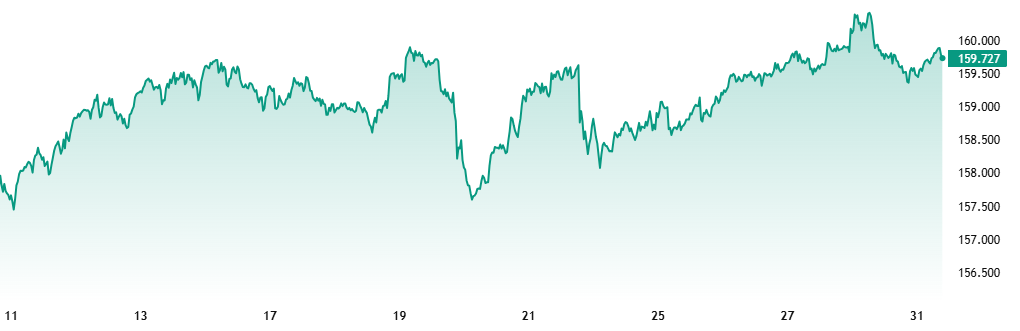
The yen fell to near 159.80 per dollar, edging closer to the psychologically significant 160 threshold, its weakest level in months. The U.S. dollar index firmed, while Treasury yields ticked higher, with the 10-year yield hovering near recent highs.
Japanese equities advanced, with exporters benefiting from the weaker currency, while the S&P 500 (SPX) held near record levels, reflecting stable global risk appetite. Gold prices remained subdued, while Brent crude (LCOc1) traded largely unchanged.
Event Details
Data showed Tokyo’s core CPI slowed more than expected in March, signaling easing price pressures in Japan’s capital and reinforcing doubts about sustained inflation momentum nationwide. The reading, often seen as a leading indicator for national trends, suggested that underlying inflation may struggle to stay above the BOJ’s 2% target. [web:1]
The softer print comes just weeks after the BOJ ended its negative interest rate policy, a move that initially boosted the yen. However, the latest data has led markets to reassess how quickly the central bank can proceed with further rate hikes.
Policy Expectations Shift
Traders have scaled back expectations for additional tightening this year, with rate futures pricing a slower normalization path. The BOJ has emphasized a data-dependent approach, and the latest inflation figures complicate its policy outlook.
“The Tokyo CPI miss undermines confidence in a steady inflation cycle,” said a Tokyo-based FX strategist. “It gives the BOJ less urgency to hike again, and that’s feeding directly into yen weakness.”
The divergence between a cautious BOJ and a still relatively hawkish Federal Reserve continues to widen interest rate differentials, a key driver of yen depreciation.
Cross-Asset Impact
The weaker yen supported Japanese exporters, lifting the Nikkei index, while also reinforcing carry trade dynamics in FX markets. Higher U.S. yields added further support to the dollar, keeping pressure on low-yielding currencies.
Safe-haven demand remained muted despite the yen’s decline, indicating that the move was driven more by monetary policy expectations than risk aversion. Meanwhile, emerging market currencies showed mixed performance, with some benefiting from stable global sentiment.
Broader Macro Implications
The yen’s slide raises concerns for Japanese policymakers, particularly around imported inflation and currency stability. A move beyond 160 could increase the likelihood of verbal or direct intervention by authorities, as seen in previous episodes of rapid depreciation.
At the same time, weaker inflation data challenges the narrative of a durable wage-price cycle in Japan, a cornerstone of the BOJ’s policy normalization strategy. This may delay further tightening and prolong accommodative conditions in the world’s third-largest economy.
“Markets are testing the BOJ’s tolerance for yen weakness,” said a Singapore-based macro analyst. “If inflation doesn’t rebound, policymakers may find themselves stuck between supporting growth and stabilizing the currency.”
Outlook Risks
Investors will closely monitor upcoming national CPI data for confirmation of the Tokyo trend, as well as any signals from BOJ officials regarding policy direction.