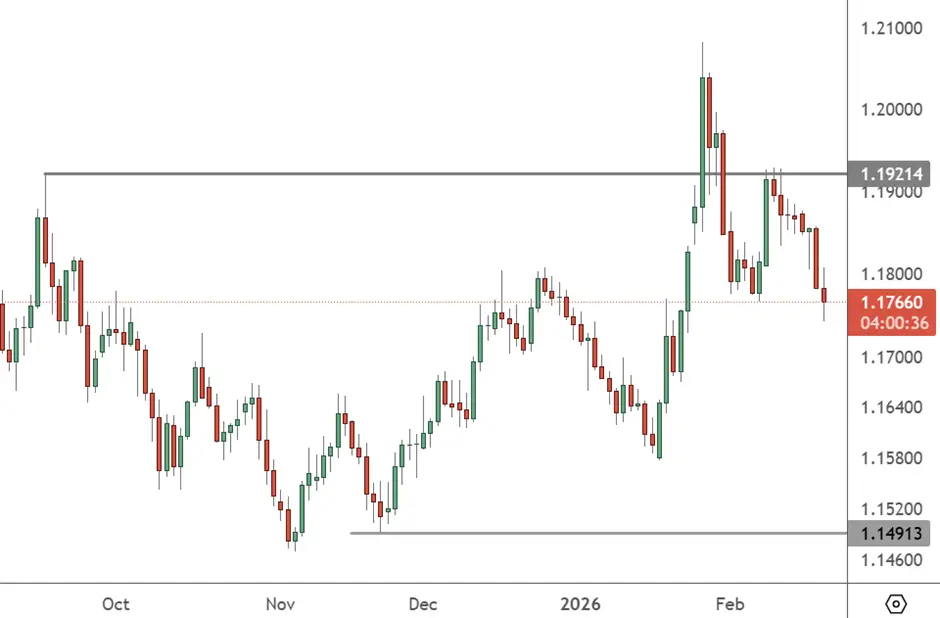



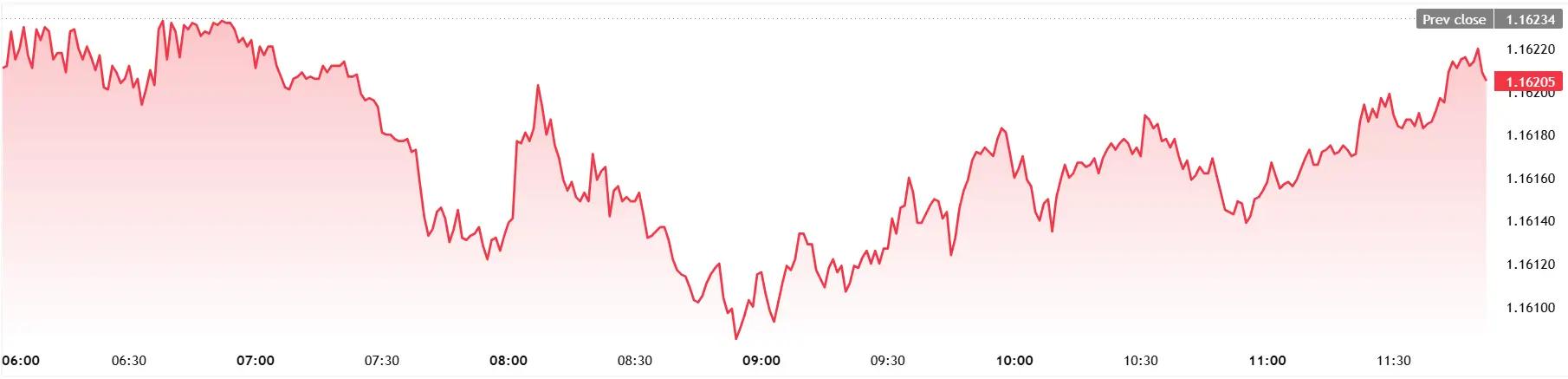
The euro eased to around 1.1600 against the US dollar in early Asian trade on Monday, weighed by fresh jitters over US–Iran tensions and lingering risk‑aversion in currency markets. EUR/USD slipped to about 1.1615 in early Monday trade, leaving the pair within striking distance of the psychologically significant 1.1600 level after a steady decline over recent weeks.
Why the euro is weakening
The retreat in the euro reflects broader demand for the US dollar as a safe‑haven asset, as traders brace for possible escalation in the Middle East. Heightened US–Iran frictions have pushed Brent crude toward the 100‑dollar mark, stoking fears of inflation‑driven demand shocks and prompting investors to favour the greenback over risk‑sensitive currencies such as the euro. At the same time, the Federal Reserve has signaled a more cautious stance, reinforcing Treasury‑yield support for the dollar even as the European Central Bank leaves its own policy on hold.
Broader market and policy backdrop
The euro’s recent slide marks a clear shift from the 1.17–1.18 range it held earlier in the year, as the twin forces of elevated Middle East tensions and comparatively firm US economic data tilt the balance in the dollar’s favour. San Francisco Fed President Mary Daly recently warned that unless the Iran conflict resolves quickly, the Fed may not be able to simply “look through” a temporary spike in oil prices, suggesting future rate decisions could remain sensitive to geopolitical risks. Meanwhile, the ECB has cited the Middle East situation as a source of “significantly more uncertain” growth and inflation prospects, effectively limiting the case for a near‑term easing cycle and narrowing the policy‑yield gap versus the United States.
Geopolitical context and regional risk
US–Iran tensions have simmered for months, with Washington insisting Tehran seeks a deal while Tehran dismisses negotiations and presses for control over strategic chokepoints such as the Strait of Hormuz. The US has repeatedly threatened “far greater” strikes if Iran does not agree to terms, while Iran’s leadership vows continued resistance, raising the risk of prolonged disruption to energy flows and trade routes. Markets have grown skeptical of quick resolution, with surveys showing a majority of investors expecting the conflict to drag into late spring without a full reopening of key shipping lanes.